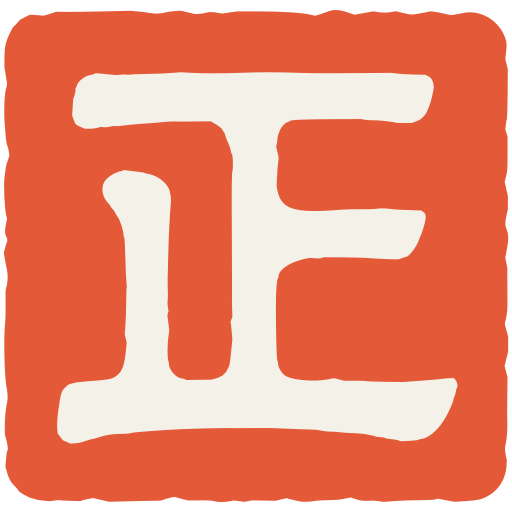
Tashika is 確か — tashika. A Japanese word, and an ordinary one: certain, sure, verified. Not certain the way a confident person is certain. Certain the way a thing is once you have checked it — the quiet kind, arrived at by looking rather than by insisting.
The mark is a different character. 正 — correct, upright, true. It is also the tally. Across East Asia you count by drawing 正, one stroke at a time, five strokes to the finished character, a record built mark by mark until the count is plain. A counting glyph, on the door of a company whose business is counting the thing no one else counts.
The two characters were chosen apart, for their meanings. Set side by side they spell a third thing: 正 + 確 = 正確 — seikaku — accurate, precise, correct. The mark and the name turn out to be the two halves of the word for what we do. We did not arrange that. We found it afterward, which is the better way to find a thing, and the only way you would trust it.
A note on the writing, since people ask. 正 and 確 are Han characters — Chinese in origin, used in Japanese, the same glyph and the same meaning to a reader in either language. The か at the end is kana, which is Japanese alone; it is the single stroke that fixes the name to the language it came from. So the name is Japanese, and the script beneath it is shared — which suits a company that would rather its ideas travelled than its flag.
And the form the certainty takes is a seal. A stamp, pressed once, in cinnabar: this was checked. Older than the company by a few centuries, and exactly the gesture the company is for.